
B2B eCommerce for manufacturers is the practice of selling finished goods, spare parts, or configured-to-order products directly to other businesses through a digital channel such as an online portal or self-service storefront. With Gartner forecasting that 80% of all B2B sales interactions will take place in digital channels by 2025, investing in eCommerce has therefore become one of the most effective ways for manufacturers to boost revenue and deepen customer relationships.
In this blog, we will provide a comprehensive guide on B2B eCommerce for manufacturers, with actionable insights to help businesses successfully establish and manage eCommerce platforms that scale and streamline sales in 2026 and beyond.
Transition from traditional to modern B2B sales model
Traditionally, the B2B manufacturing sales model involved a multi-layered chain: the manufacturer sold products to wholesalers, who then supplied distributors; distributors provided inventory to retailers, and finally, the products reached the end consumer. This conventional model, while effective for decades, creates complex logistics, lengthens sales cycles, and limits manufacturers’ direct access to customers and real-time market insights.
Now, with digital technology becoming pervasive, B2B manufacturers are rapidly shifting towards direct online sales channels. Transitioning from traditional, multi-layered sales models to direct or integrated digital channels enables manufacturers to enhance the customer experience, increase operational flexibility, and build stronger long-term partnerships.
When moving online, in addition to the B2B model, manufacturers can also consider expanding into the following approaches:
-
Direct-to-Consumer (DTC): Manufacturers sell their products directly to end customers via their own eCommerce website, bypassing traditional intermediaries such as wholesalers and retailers.
-
B2B2C model: The manufacturer’s eCommerce system is digitally connected not just to the end customer but also to their network of partners: retailers, distributors, or service providers, effectively modernising the traditional sales approach through digital integration.
Why manufacturers need B2B eCommerce
Manufacturers are increasingly recognising that traditional sales methods are no longer sufficient to meet the demands of today’s digitally driven market. The shift toward B2B eCommerce represents a critical evolution, enabling manufacturers to streamline complex sales processes, enhance customer experiences, and expand their reach in both local and global markets.
Major driving forces transforming traditional sales and purchasing behaviours include:
-
Evolving B2B buyers’ expectations: Today’s B2B customers expect greater autonomy and personalisation throughout their purchasing journey. McKinsey indicates that 71% of buyers now expect personalised experiences. They desire easy online account management, the ability to reorder products swiftly without human assistance, and access to tailored catalogues that incorporate negotiated pricing and contract details. They also seek purchase interactions that mirror the convenience and transparency of consumer eCommerce, demanding instant access to detailed product information, clear pricing structures, seamless self-service ordering, and efficient online account management.
-
Need to streamline sales cycles and operational efficiencies: Traditional sales models, heavily dependent on phone orders and manual processing, are increasingly inefficient. By implementing a robust B2B eCommerce platform, manufacturers can automate order workflows, approval processes, and payment handling, thereby reducing errors, cutting administrative overhead, and accelerating order fulfilment. This operational agility is essential for manufacturers to meet buyer demands for speed and accuracy while optimising internal resources.
-
Scalability for both local and global markets: Unlike traditional methods that struggle with complex SKU management, regional pricing, and currency variations, modern eCommerce platforms support multi-currency transactions, multiple languages, and localised catalogues. This enables manufacturers to expand into new geographic markets with ease and tailor their offerings to diverse customer needs, driving growth opportunities worldwide.
-
Omnichannel integration: B2B buyers use various shopping channels, including desktop, mobile, sales reps, and online marketplaces, and expect seamless, omnichannel experiences. According to McKinsey's 2024 B2B Pulse Survey, B2B buyers now use an average of more than 10 different channels throughout their buying journey, including in-person, remote, and digital self-service interactions. Manufacturers adopting integrated eCommerce platforms can unify various touchpoints, ensure accurate inventory and pricing across channels, and expand visibility through digital marketplaces, improving convenience for customers and competitive positioning.
Challenges B2B manufacturers face when transitioning to eCommerce
Before diving into the strategies for successfully adopting eCommerce, it is essential to first understand the unique challenges that B2B manufacturers commonly face during this transition. Being aware of these obstacles helps businesses prepare more effectively, align their resources, and develop targeted approaches that address these difficulties head-on. With this foundation in mind, let’s explore the key challenges manufacturers face when transitioning to eCommerce.
Complex product and order management
Manufacturers often deal with highly customised products that require specific configurations, large bulk orders, and unique payment terms. Some eCommerce platforms, however, typically lack the flexibility to easily support these complexities, making it difficult for manufacturers to replicate their offline sales processes online. This complexity necessitates tailored eCommerce solutions that can handle diverse customer needs without compromising ease of use.
Integration with legacy systems
Most manufacturers have multiple long-standing systems like ERP, CRM, MES, and supply chain management tools that were designed for offline operations. Integrating these disparate systems with a modern eCommerce platform presents technical challenges and can be expensive. Without proper integration, data remains siloed, leading to inefficiencies, inaccuracies in inventory, and a poor customer experience.
Balancing sales cycles and customer experience
Manufacturing sales often involve long and complex B2B relationship cycles based on trust and negotiation. Transitioning to eCommerce requires balancing these relationship-driven processes with digital self-service ordering and streamlined customer experiences. Achieving this balance is challenging, yet crucial for attracting and retaining customers in a competitive online market.
Supply chain and fulfilment complexity
eCommerce introduces new demands on supply chain management, requiring manufacturers to provide real-time inventory visibility and flexible fulfilment options such as multiple shipping methods or drop-shipping. Managing these complexities requires sophisticated logistics and IT capabilities to ensure customer orders are fulfilled accurately and promptly.
Organisational and cultural resistance
Transitioning from traditional sales methods to eCommerce often faces internal resistance arising from fear of change, lack of digital skills, and uncertainties about adopting new technologies. This resistance can slow down or impede the adoption of eCommerce initiatives within the organisation.
Learn more: Step-by-step guide to successfully transition your B2B clients to eCommerce sites.
Channel conflict management
If you’re expanding to DTC, introducing direct online sales can disrupt existing relationships with distributors and resellers, as it bypasses traditional sales channels and may lead to heightened channel conflicts and resistance. B2B manufacturers managing multiple sales channels simultaneously often face difficulties because they must balance the direct customer relationship with maintaining healthy partnerships in their established indirect sales networks. This dual-channel pressure can complicate pricing strategies, brand messaging, and customer experience consistency across channels.
Best practices for B2B manufacturers to boost eCommerce efficiency
1. Understanding your target audience
The journey to a successful B2B eCommerce deployment begins with a deep understanding of the target audience. Manufacturers must invest time and resources into thoroughly researching:
-
Who your customers are
-
What products and services do your customers prioritise
-
How your customers prefer to conduct transactions
For manufacturers selling to both B2B and DTC buyers, it’s crucial to distinguish between B2B and DTC segments and determine which group should be prioritised based on business goals and market dynamics. Understanding what products and services each segment values most and how they prefer to conduct transactions is equally important.
Mapping the entire customer journey, from initial discovery through procurement workflows to post-sale support, helps uncover pain points and opportunities for simplification. Analysing competitors’ digital presence also reveals market expectations and feature standards critical to meet or exceed.
Equally important is close collaboration with internal sales teams, who have frontline insight into product demand, consultation needs, and customer readiness for digital self-service solutions. This foundational knowledge informs design, strategy, and platform decisions.
2. Formulating a digital commerce strategy
Once manufacturers have a clear understanding of their customers, they should develop a dedicated digital commerce strategy that aligns closely with their overall business goals. This strategy may include specific online sales targets, such as achieving set revenue milestones, increasing digital channel sales by a defined percentage within a certain timeframe, or expanding market share in key geographic regions by acquiring new online customers.
Developing this strategy involves several detailed steps:
-
Defining precise online sales goals that may encompass revenue targets, operational efficiency improvements, and enhanced customer satisfaction, tailored to manufacturing dynamics.
-
Prioritising which product lines and customer segments to digitalise first, allowing a phased rollout that minimises risks while encouraging adoption within production and sales teams. For example, a manufacturer could initially launch digital commerce for B2B customers, such as distributors or wholesalers, by enabling online bulk ordering and account-specific pricing, before expanding digital offerings to direct-to-consumer (DTC) segments with tailored product selections, marketing campaigns, and self-service features.
-
Setting measurable key performance indicators (KPIs), such as online order volume growth, digital channel adoption rates, and cost savings in manufacturing and distribution processes, to monitor progress and enable timely adjustments. For instance, if focusing on B2B customers, KPIs might include the number of new distributor accounts registered online, average order size, and reduction in manual quotation requests. For DTC segments, KPIs could be the percentage increase in first-time online purchasers, average basket value, and customer retention rate through repeat purchases.
-
Creating a robust return-on-investment (ROI) model that justifies initial investments by clearly outlining expected financial and operational benefits tied to manufacturing efficiencies and sales growth.
Strategic clarity provides manufacturers with a focused roadmap that guides technology selection, resource allocation, and organizational alignment, ensuring the digital commerce initiatives support long-term business success.
3. Selecting the right B2B eCommerce platform
Selecting the right B2B eCommerce platform is a critical decision for manufacturers, as it directly impacts their ability to serve complex buyer needs, integrate with existing systems, and scale operations efficiently. Here is a detailed guide on how manufacturers can identify their needs, define priorities, and choose the ideal platform:
Manufacturers should start by thoroughly understanding their unique business needs and customer expectations, then translate these directly into concrete B2B eCommerce platform requirements. This includes analysing:
-
B2B buyers expect to purchase complex products efficiently, including configurable items, bulk quantities, negotiated or customer-specific pricing, and repeat orders.
Key platform features should support self-service ordering through product configurators, quick ordering, saved order lists, and volume or contract pricing. -
B2B buyers typically follow structured purchasing and approval processes, often involving multiple stakeholders and purchase orders.
Platforms should support role-based company accounts, configurable approval workflows, and purchase order management. -
B2B buyers may coexist with B2C or DTC customers within the same business, especially for manufacturers operating hybrid sales models.
Essential features include flexible customer segmentation, separate catalogues and pricing rules, and unified B2B2C operations on a single platform. -
B2B buyers rely on accurate, real-time information across pricing, availability, order status, and account data.
Platform needs to provide strong APIs, middleware compatibility, or extensible integration frameworks to ensure reliable synchronisation with ERP, CRM, PLM, PIM systems and their integration needs. -
B2B buyers increasingly operate across regions and markets, expecting local currencies, languages, and compliant purchasing experiences.
Platforms should include built-in multi-language and multi-currency support, localisation controls, and readiness for relevant regulatory and industry requirements.
With a clear list of “must-have” and “nice-to-have” features, manufacturers can create a weighted evaluation matrix to compare platforms. This matrix should assess how well each platform supports manufacturing-specific requirements, scalability, integration ease, user experience, and vendor support.
Features should be prioritised based on their impact on:
-
Operational efficiency (e.g., ERP integration, automated workflows).
-
Customer experience (e.g., product configurators, personalised catalogues).
-
Sales growth potential (e.g., hybrid selling models, bulk ordering).
-
Risk mitigation (e.g., compliance, security).
Manufacturers may find that deep customisation capabilities and seamless integration rank higher than aesthetic user interface options that can be tweaked later. It’s essential to involve stakeholders from sales, IT, and operations to weigh feature importance based on real-world impacts.
Manufacturers should conduct:
-
Detailed product demos and technical evaluations focusing on manufacturing use cases.
-
Reference checks and case studies from other manufacturing clients.
-
Trial periods or pilot projects to test real integration scenarios and user workflows.
-
Consultation with platform vendors or an experienced eCommerce development expert can help you clarify feature capabilities, future roadmap, and customisation limits before making a major investment. At On Tap, we’ve spent 19 years helping manufacturers and B2B brands build and scale their eCommerce websites. If you’d like an expert perspective on which platform best fits your goals, get in touch with our team.
Additionally, comparing leading platforms known for manufacturing eCommerce, such as Magento, Adobe Commerce, Shopify Plus, Salesforce Commerce Cloud, and Big Commerce, can provide a benchmark.
Pro tips: Discover how to choose the ideal B2B eCommerce platform for manufacturers with our comprehensive guide featuring the 10 leading B2B eCommerce platforms.
By combining internal needs assessment with external platform research and hands-on testing, manufacturers can confidently select a B2B eCommerce platform that supports their complex requirements, drives growth, and delivers a superior buying experience.
4. Integrating core enterprise systems and syncing data in real time
System integrations form the backbone of a mature digital commerce system. Key integration touchpoints include:
-
ERP (Enterprise Resource Planning) systems: Provide real-time synchronisation of inventory, pricing, and order processing. They automate workflows, reduce errors, improve cost management, and give comprehensive business insights to optimise operations.
-
OMS (Order Management System): Streamlines order processing from entry to fulfilment, enhancing accuracy and speeding up delivery to improve customer satisfaction.
-
SCM (Supply Chain Management) system: Offers end-to-end visibility and automation for procurement, production, and shipping, boosting efficiency and reducing manual tasks.
-
MES (Manufacturing Execution Systems): Monitor and control manufacturing processes on the shop floor, ensuring quality, tracking production status, and improving operational efficiency.
-
CRM (Customer Relationship Management) platforms: Enrich customer profiles with purchase behaviour data to enable personalized marketing, better customer service, and stronger loyalty.
-
PLM (Product Lifecycle Management) and PIM (Product Information Management) systems: Ensure accurate, consistent product data and provide digital assets like spec sheets and manuals for enhanced product presentation.
-
WMS (Warehouse Management System): Optimise inventory management, improve order fulfilment accuracy, and increase warehouse productivity with real-time tracking and automation, reducing errors and costs while enhancing customer satisfaction.
-
Accounting systems: Manage complex quoting, automate invoicing, and streamline financial operations for accurate billing and better cash flow management.
You should also add typical B2B quoting processes, including RFQ (Request for Quote) and RFP (Request for Proposal) workflows, to accommodate complex, custom orders.
In B2B eCommerce for manufacturers, your online store cannot operate as a silo; it must be tightly integrated to keep data consistent and up-to-date everywhere. Implementing real-time enterprise data sync yields several benefits for a manufacturer’s eCommerce operations:
-
Unified & Accurate Data: All systems share the same single source of truth.
-
Operational Efficiency: Seamless integration reduces manual work, eliminates duplicate data entry.
-
Better Customer Experience: With real-time integration, buyers get a smoother, more transparent experience.
To achieve real-time data sync, adopting an API-first integration approach is considered best practice. An API-driven integration is flexible and scalable, so your eCommerce platform can quickly “talk” to ERP, CRM, or any other software as changes happen. Many manufacturers choose to implement this via an Integration Platform as a Service (iPaaS) for speed and simplicity. It’s offered as a cloud-based service, meaning the provider handles the heavy lifting: setup, configuration, and ongoing maintenance are all taken care of for you. For instance, On Tap’s Integration Flow is a fully managed integration solution that uses an API-first approach to connect your eCommerce site with any system that offers an API, from ERP and CRM to WMS and more, making different platforms talk to each other seamlessly while minimising in-house IT effort.
5. Conducting pilot testing
Before full launch, manufacturers should conduct pilot testing with actual customers, such as trusted distributors, channel partners, and internal sales staff. This phase validates:
-
Accuracy of inventory and pricing information
-
Usability of product configurators
-
Ordering workflows
-
Post-sales support experiences
Customer feedback collected during pilot testing informs iterative improvements to site navigation, technical content, and overall user interface, helping accommodate diverse technical literacy levels and buying practices typical in manufacturing sectors.
6. Driving adoption through onboarding and enablement
Launching the platform is only the beginning. Since many customers are familiar with traditional ordering methods like phone calls or emails to sales representatives, they may initially hesitate to place orders online. To encourage adoption, it is essential to provide thorough onboarding and support for both customers and internal sales teams.
Training sessions, detailed tutorials, live demonstrations, and dedicated helpdesk resources alleviate initial friction and encourage usage. Guided selling tools embedded within the digital ecosystem can assist sales representatives in recommending appropriate products and configurations. These tools foster a collaborative selling approach where human expertise complements digital convenience, resulting in better customer outcomes.
To encourage internal teams to adopt a B2B eCommerce platform, it is essential to combine comprehensive training, clear communication of benefits, and ongoing support. Empower sales and customer service reps by involving them early, addressing any resistance to change, and offering incentives tied to adoption goals. Enabling the sales team to use the platform as a tool to enhance their work, fostering collaboration, and adapting internal processes as needed.
Another notable area for manufacturers is that you are serving distinct customer segments, such as B2B clients with complex procurement needs and DTC buyers with simpler, faster purchase expectations. Each group requires a different onboarding approach tailored to their unique behaviours and preferences.
Learn more: Master the art of smoothly onboarding your customers online with our all-inclusive guide on how to onboard your B2B customers efficiently.
7. Continuous monitoring and optimisation
To maintain momentum, manufacturers need to continuously monitor and optimise their eCommerce environments with a proactive, data-driven approach. Leveraging ERP and eCommerce analytics tools provides comprehensive visibility into customer buying patterns, seasonal demand fluctuations, reorder frequencies, and product performance metrics. This detailed insight allows manufacturers to identify emerging trends, anticipate inventory needs, and adjust pricing or promotions dynamically to maximise revenue and customer satisfaction.
Regular consultations and open communication channels with key accounts and strategic customers are essential to gather constructive feedback and uncover evolving needs. These ongoing dialogues help prioritise enhancements to the digital platform, such as introducing advanced product configurators that simplify complex ordering, integrating self-service portals for service requests or warranty management, and enabling personalised pricing or contract terms that reward loyal buyers.
B2B manufacturers should also actively test and deploy new technologies like AI-powered recommendation engines, chatbots for real-time customer support, and mobile-friendly interfaces to keep pace with buyer expectations. Monitoring platform performance metrics such as site speed, uptime, and user engagement helps maintain a seamless and responsive user experience.
Case studies: Manufacturers excelling in eCommerce
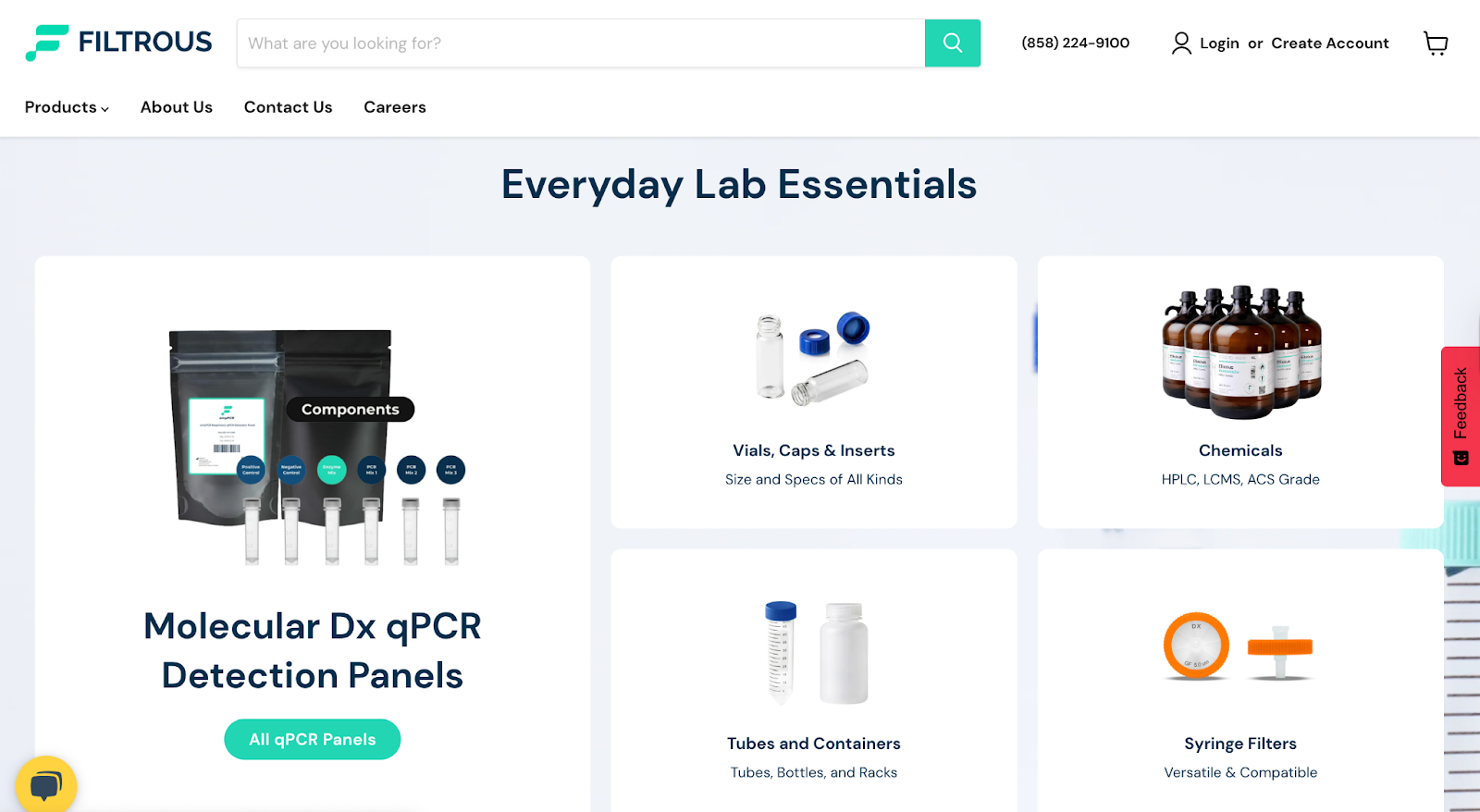
A strong example of a manufacturer that successfully transitioned to an online B2B store is Filtrous, a B2B laboratory supply manufacturer. Filtrous developed a streamlined B2B eCommerce site featuring customer-specific catalogues, custom discounts, automated payment options, and self-service ordering capabilities. This new platform was launched within just two months, enabling customers to place and manage orders online efficiently. As a result, the company significantly reduced time spent on manual processes, saving about 10 hours weekly for customer service and 2 hours for sales, and dramatically improved the buying experience. The successful transition empowered Filtrous to focus more on business growth and customer relationships, achieving a notable increase in conversion rates and operational efficiency.
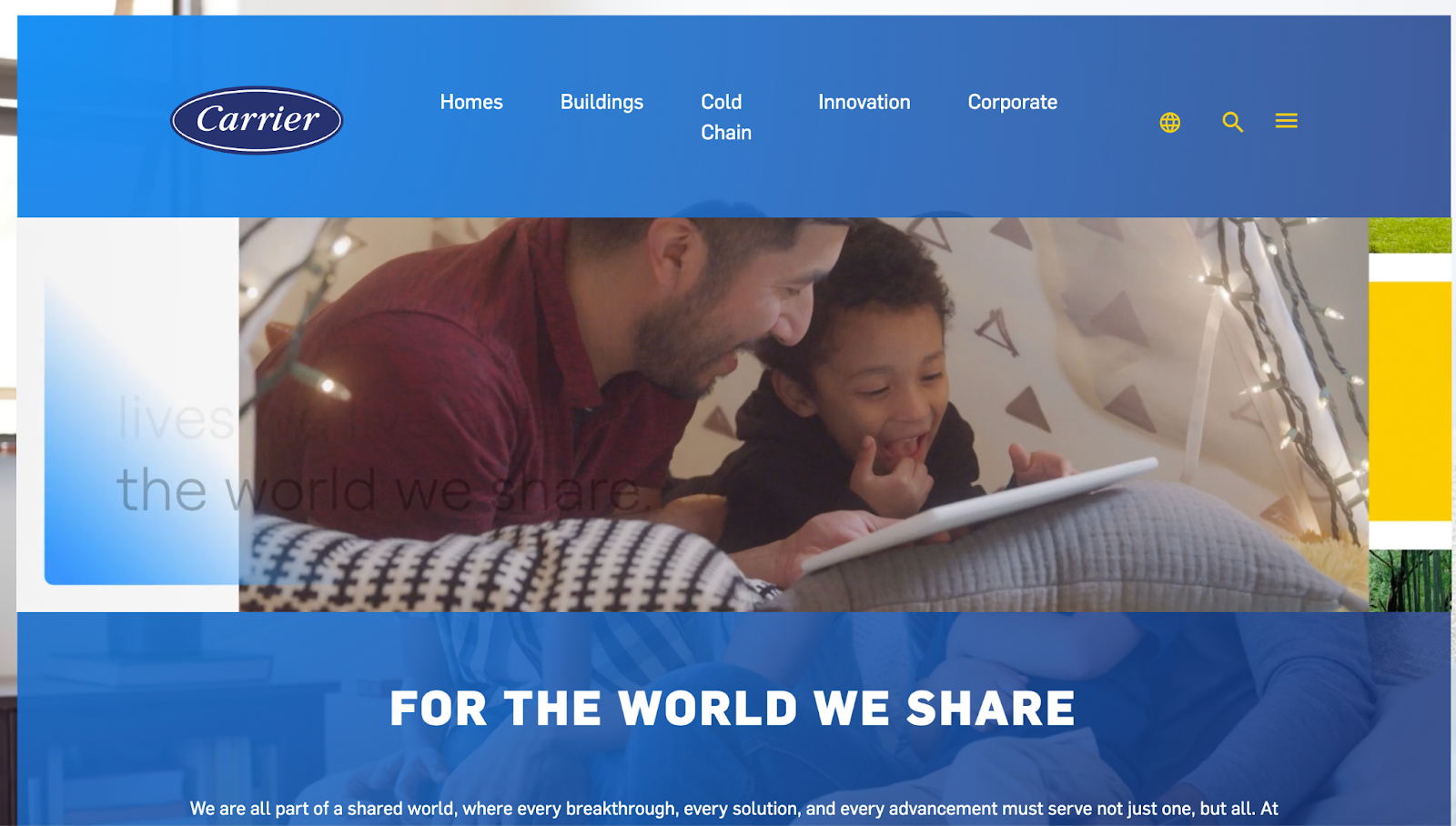
Another example to learn from is Carrier, a top-tier global provider in HVAC and building solutions, which successfully transformed its eCommerce strategy to streamline and accelerate the process of setting up online storefronts. Their online platform enabled Carrier to provide tailored, frictionless digital commerce experiences to their diverse customers, including dealers, distributors, service technicians, national accounts, and homeowners across 180 countries. It supports multi-currency, multi-language, and various fulfilment options to meet complex enterprise commerce needs.
Conclusion
The future of manufacturing sales is unequivocally digital. Embracing B2B eCommerce is not just a means to keep pace but a strategic imperative that offers manufacturers the power to scale operations, enhance customer experiences, and outpace competitors. By understanding current trends, committing to a deliberate digital strategy, selecting the right technology platforms, integrating systems thoroughly, and continuously optimising based on data and customer feedback, manufacturers can unlock significant growth and operational efficiency in 2026 and the years ahead.
Embarking on a digital commerce transformation can seem complex, but partnering with experienced specialists makes the journey smoother and more successful. If your manufacturing business needs expert guidance to select and implement the right B2B eCommerce platform, integrate with ERP and CRM systems, design tailored digital buying journeys for your customers, and drive adoption across all channels, the team at On Tap, a B2B eCommerce agency with 19+ years of experience, is ready to support you. Contact us today for a free consultation or visit our service page to learn how we can help your business realise the full potential of B2B eCommerce in 2026 and beyond.